Why Does My Facility Need a Floor Scrubber? Your Questions Answered.
You’re managing a busy facility. You’ve got mops. You’ve got a dedicated cleaning crew. So why does everyone keep telling you that you need a floor scrubber?
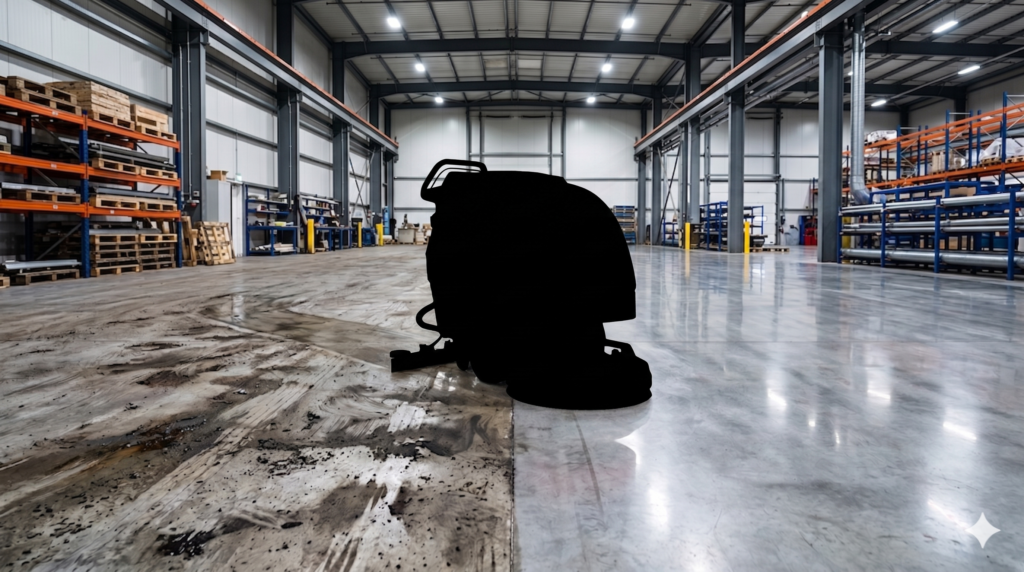
Because mopping simply moves dirt around—while floor scrubbing removes it completely.
That’s the short answer. But if you’re responsible for a commercial or industrial facility, you deserve the full picture: the liability risks, compliance standards, hidden costs of deferred maintenance, and the core questions every facility manager eventually asks.
What Exactly Is a Floor Scrubber and How Is It Different From Mopping?
A floor scrubber is a professional-grade machine that simultaneously scrubs, cleans, and dries your floors in a single pass. It uses rotating brushes or pads to agitate embedded grime, applies a controlled cleaning solution, and immediately vacuums dirty slurry into a recovery tank.
A mop pushes dirty water across the floor and leaves it behind to air dry.
Mopping: Spreads bacteria, grease, and fine contaminants across a wider surface area.
Floor Scrubbing: Pulls dirt off the floor entirely, leaving a safe, dry, and sanitized surface.
For any commercial or industrial facility dealing with foot traffic, machinery, chemicals, or food handling, traditional mopping simply cannot compete.
Why Is Mopping Not Enough for a Commercial Facility?
Mops are designed for light residential or low-traffic environments. In a warehouse, production floor, logistics hub, or commercial kitchen, mopping becomes “cleaning theater”—it looks like cleaning, but it isn’t.
Spreads Contamination: Mop water becomes contaminated after the first few passes, spreading bacteria across every surface it touches.
Redistributes Heavy Grease: Mops cannot penetrate oil, chemical residue, or compacted industrial grime.
Creates Slip Hazards: Wet mopped floors take longer to dry, creating liability hazards during and after shifts.
Fails Compliance Standards: OSHA and health agency standards require a level of floor hygiene that mopping physically cannot deliver consistently.
What Types of Facilities Actually Need a Floor Scrubber?
Any facility with high floor traffic or regulated cleanliness standards requires commercial scrubbing equipment:
Warehouses & Distribution Centers: Captures ground-in dirt, dust, and tire marks from constant forklift and foot traffic.
Manufacturing & Production Floors: Lifts chemical residue, oil, and fine particulates that cause slip risks.
Commercial Kitchens & Food Processing: Meets strict health code compliance through deep floor hygiene.
Hospitals & Medical Facilities: Controls surface bacteria and minimizes patient and staff infection risks.
Retail Spaces & Showrooms: Maintains high aesthetic standards and protects floor sealants against heavy foot traffic.
How Does a Dirty Floor Create a Liability Problem?
Slip-and-fall accidents are one of the leading causes of workplace injury claims, and the majority occur on floors that were mopped rather than properly scrubbed.
When a floor is mopped, residual grease remains embedded in the surface texture. That residue creates an invisible slip hazard—especially in humid conditions or near entrances. In the event of an injury, investigators evaluate whether the floor was properly maintained according to industry standards.
A professional floor scrubbing program provides verifiable documentation, consistency, and a defensible maintenance record. Ad hoc mopping provides none of that.
How Often Does a Commercial Facility Need Floor Scrubbing?
Recommended scrubbing schedules depend on traffic intensity and industry compliance requirements:
High-Traffic Warehouses & Plants: Monthly scrubbing minimum, with quarterly deep cleaning.
Commercial Kitchens & Food Plants: Weekly to bi-weekly scrubbing for health code compliance.
Permanent Surface Damage: Grease and chemical residue break down floor coatings and concrete over time, leading to expensive resurfacing bills.
Microbial Growth: Warm, humid environments accelerate mold and bacteria growth in neglected floor grime.
Escalating Labor Costs: Heavily soiled floors require more manual labor hours and chemical product for worse overall results.
Why Choose PowerKleen for Your Floor Care Needs?
Robey’s PowerKleen brings over 40 years of industry experience to commercial and industrial floor care:
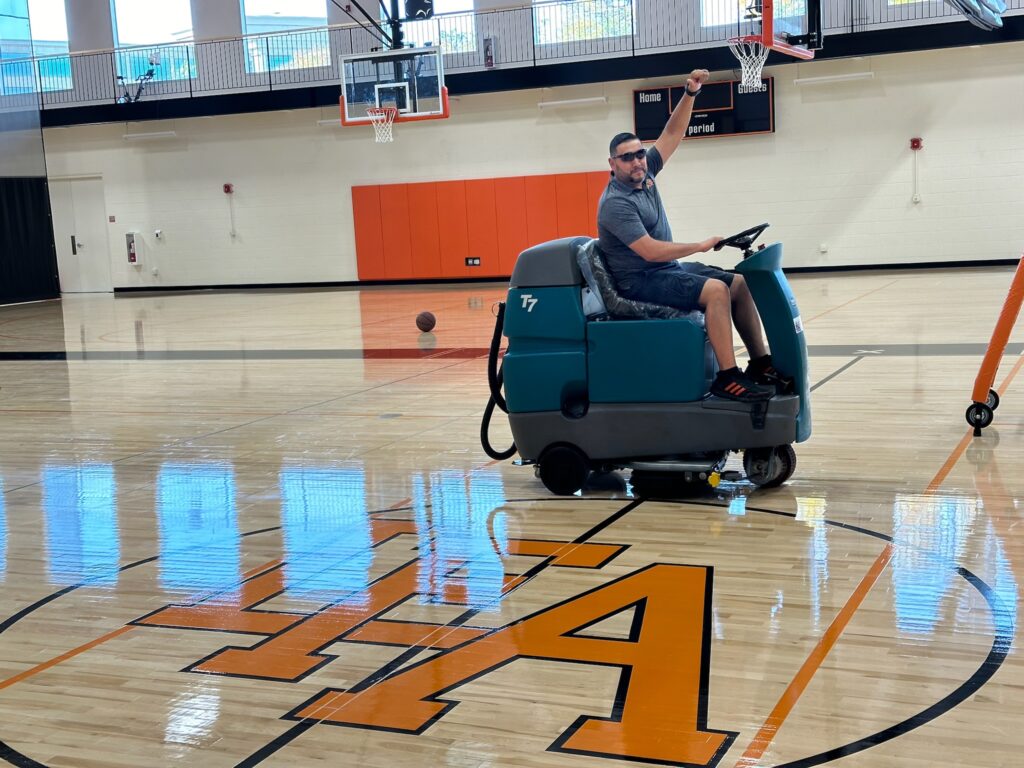
Specialized Equipment: We match your exact square footage and floor type with top-tier equipment like the Tennant T7.
Inspection-Ready Results: We deliver verifiable cleanliness that satisfies safety officers, plant managers, and regulatory inspectors.
Full Service & Support: From new and refurbished sales to rentals and ongoing field maintenance.
Frequently Asked Questions
Can a floor scrubber be used on polished concrete or epoxy floors?
Yes! By selecting the appropriate pad type and chemical solution, floor scrubbers clean polished concrete and epoxy surfaces without scratching or stripping sealants.
Are ride-on scrubbers better than walk-behind models?
Ride-on scrubbers excel in spaces over 30,000 sq. ft. due to higher coverage speeds, while walk-behind models offer superior maneuverability in tight aisles and congested rooms.
Get Your Facility Floor Scrubbing Assessment
Stop guessing whether your floors are clean enough. Find out for certain with a professional evaluation.
Take control of your facility maintenance today:
Visit Our Showroom: 695 N Main St., Winchester, KY 40391