How to Choose the Right Floor Scrubber or Sweeper: A Practical Buying Guide
How to Choose the Right Floor Scrubber or Sweeper. A Practical Buying Guide for Commercial, Industrial, and Agricultural Facilities
Floor scrubbers and sweepers play a critical role in keeping commercial, industrial, and agricultural facilities clean, safe, and efficient. From warehouses and manufacturing plants to food processing facilities and working farms, the right cleaning equipment reduces labor, improves workplace safety, and protects your long-term flooring investment.
Whether you manage a distribution center or a multi-building agricultural operation, choosing the right machine starts with asking the right operational questions.
Start With the Job — Not the Machine
Before comparing models, clarify the specific soils and debris you need to clean:
Are you removing dry debris, dust, or loose material?
Do you need to wash away mud, grease, or sticky residue?
Is odor control, bacteria sanitation, or slip resistance a top priority?
Sweepers vs. Scrubbers: Knowing the Difference
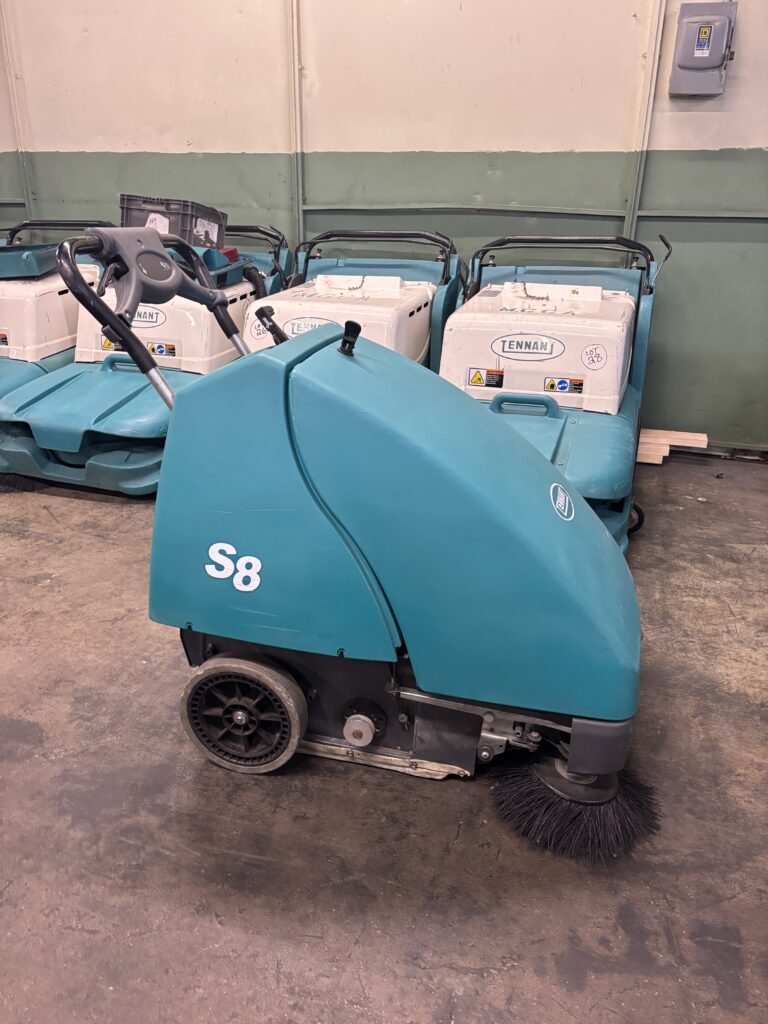
Industrial Sweepers: Best for dry material commonly found in warehouses, barns, and outdoor staging areas. Sweepers capture dust and particulate matter, but may leave a dull or gritty finish on polished surfaces.
Commercial Floor Scrubbers: Engineered for dust-free wet scrubbing, deep grime removal, and instant drying. Scrubbers leave a streak-free, white-glove finish with zero dust or grit remaining.
A Word of Caution on Debris Size:
Many warehouse managers want a sweeper to handle large pallet chunks, shrink-wrap tails, or cardboard flaps. However, most oversized debris must be picked up manually prior to sweeping. Unless your facility generates fine manufacturing waste (like metal shavings, plastic scrap, or wood chips), over 90% of commercial facilities achieve the clean look and feel they want through scrubbing rather than sweeping.
Facility Size vs. Facility Layout
Square footage is only part of the equipment equation:
Large, Open Areas: Favor high-speed ride-on scrubbers to cover maximum ground per shift.
Tight Aisles & Congested Zones: Equipment rows, narrow racks, processing lines, and hallways often require compact riders (under 28″ deck width) or walk-behind units for precise operator control.
Square Footage Selection Guidelines:
Under 6,000 Sq. Ft.: Compact walk-behind units or small ride-on scrubbers for tight zone control.
6,000 to 150,000 Sq. Ft.: Mid-size to large ride-on scrubbers (such as the Tennant T7) for high speed and minimal operator fatigue.
Over 150,000 Sq. Ft. (Open Warehouse/Factory): Operations typically stage multiple mid-size units across departments to reduce transit time, or deploy large factory-configured scrubbers with high square-footage-per-hour ratings.
Cleaning Frequency & Operating Demands
How often you clean directly dictates the heavy-duty rating your machine requires:
Multi-Shift / Daily Operations: Require heavy-duty steel components, long battery runtimes, and industrial durability.
Heavy Solvents & Forklift Tire Buildup: Demand higher down-pressure machines and a shorter amortization cycle.
Agricultural & Seasonal Cycles: Require ultra-reliable equipment that holds up under fluctuating harvesting schedules and muddy weather changes.
Floor Types and Surface Conditions
Commercial and agricultural floor surfaces vary widely:
Smooth or Textured Concrete
Sealed & Epoxy-Coated Floors
Tiled Surfaces & Finished Vinyl
Matching brush type, pad down-pressure, and water recovery systems to your exact surface improves cleaning results while preventing unnecessary floor wear. In moisture-heavy environments, immediate water pickup is crucial for slip-and-fall prevention.
Power Options, Runtime, and Long-Term Ownership
When evaluating battery-powered floor scrubbers and sweepers, consider long-term operating costs:
Shift Runtimes: Ensure the unit completes your facility’s daily cleaning in a single charge pass.
Battery Technology: Upgrading to long-life lithium battery packs provides extended runtimes, faster opportunity charging, and zero water maintenance.
Ease of Maintenance: Machines with intuitive controls, tool-free brush access, and easy-drain hoses reduce operator training time and protect machine longevity.
Frequently Asked Questions
Should I buy a combo sweeper-scrubber unit?
If your facility generates waste material not suitable for typical plumbing disposal or if you do not run a wastewater separation system, a combo unit provides dust-free sweeping and wet scrubbing in a single machine pass.
What is the most cost-effective scrubber for mid-to-large warehouses?
The Tennant T7 Ride-On Floor Scrubber paired with lithium battery packs offers an optimal balance of 30,000+ sq. ft./hr cleaning speed, exceptional reliability, and one of the lowest total costs of ownership in the industry.
Upgrade Your Facility’s Floor Care Strategy
Don’t let inefficient floor care slow down your operations. Contact Robey’s PowerKleen today to speak with an equipment specialist, evaluate your facility layout, and find the exact scrubber or sweeper for your budget.
Ready to get started?
Visit Our Showroom: 695 N Main St., Winchester, KY 40391